


Proudly made in the united states
Made in USA is where we started and where most of our work still happens.
Everything runs out of our Orlando, Florida facility, which means the people printing and sewing your order are the same people you can call about it.
Nothing gets handed off overseas, nothing sits in customs, and if something needs a second look, we walk to the floor and look at it. That proximity is the whole point — faster turnarounds, tighter quality control, and a straight line between your order and the hands that build it.
Custom apparel Design
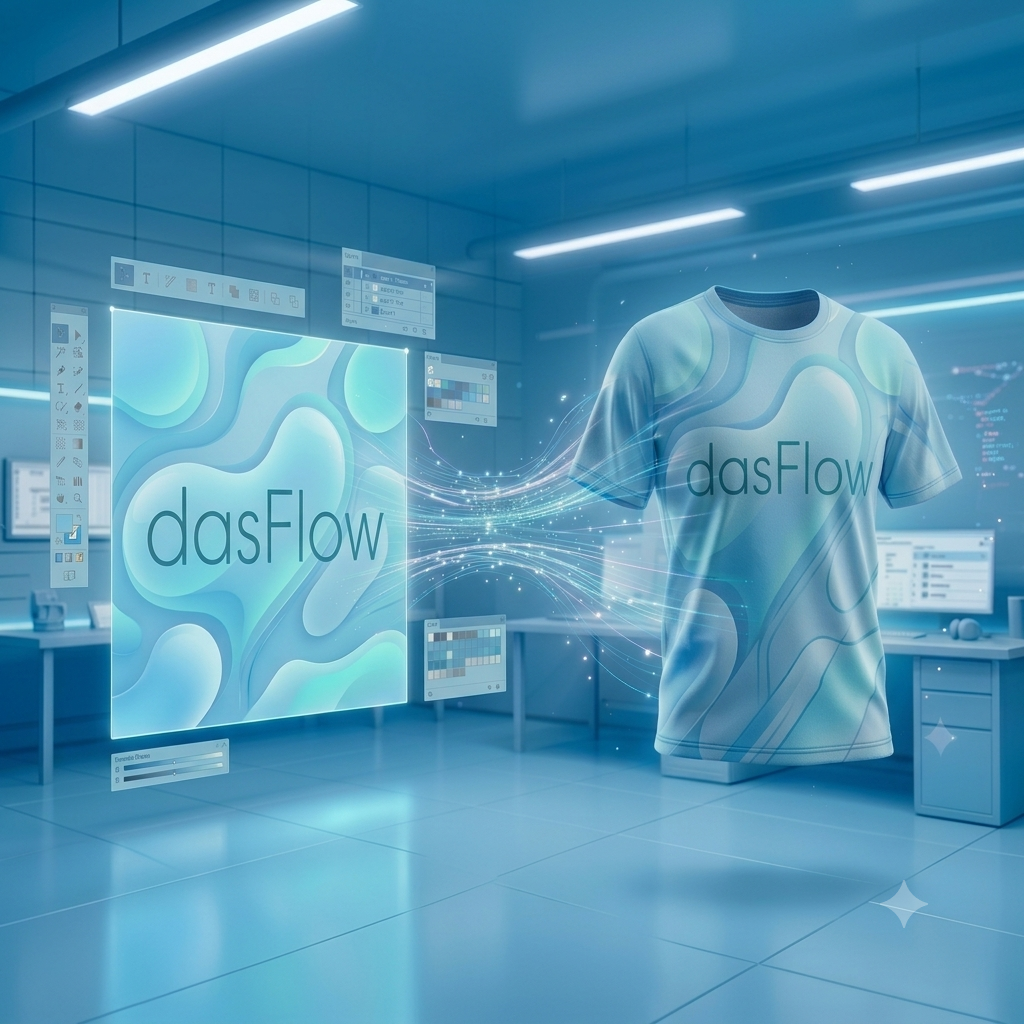
Before a single panel is printed, our design team builds your artwork to pattern in Adobe Illustrator. You see a proof and approve it, and revisions happen on screen rather than after production. Working in vector means logos stay sharp at any size, and designing directly onto the garment pattern means graphics land exactly where you expect them to — seams accounted for, no stretched logos, no surprises.
Our Sublimation printers
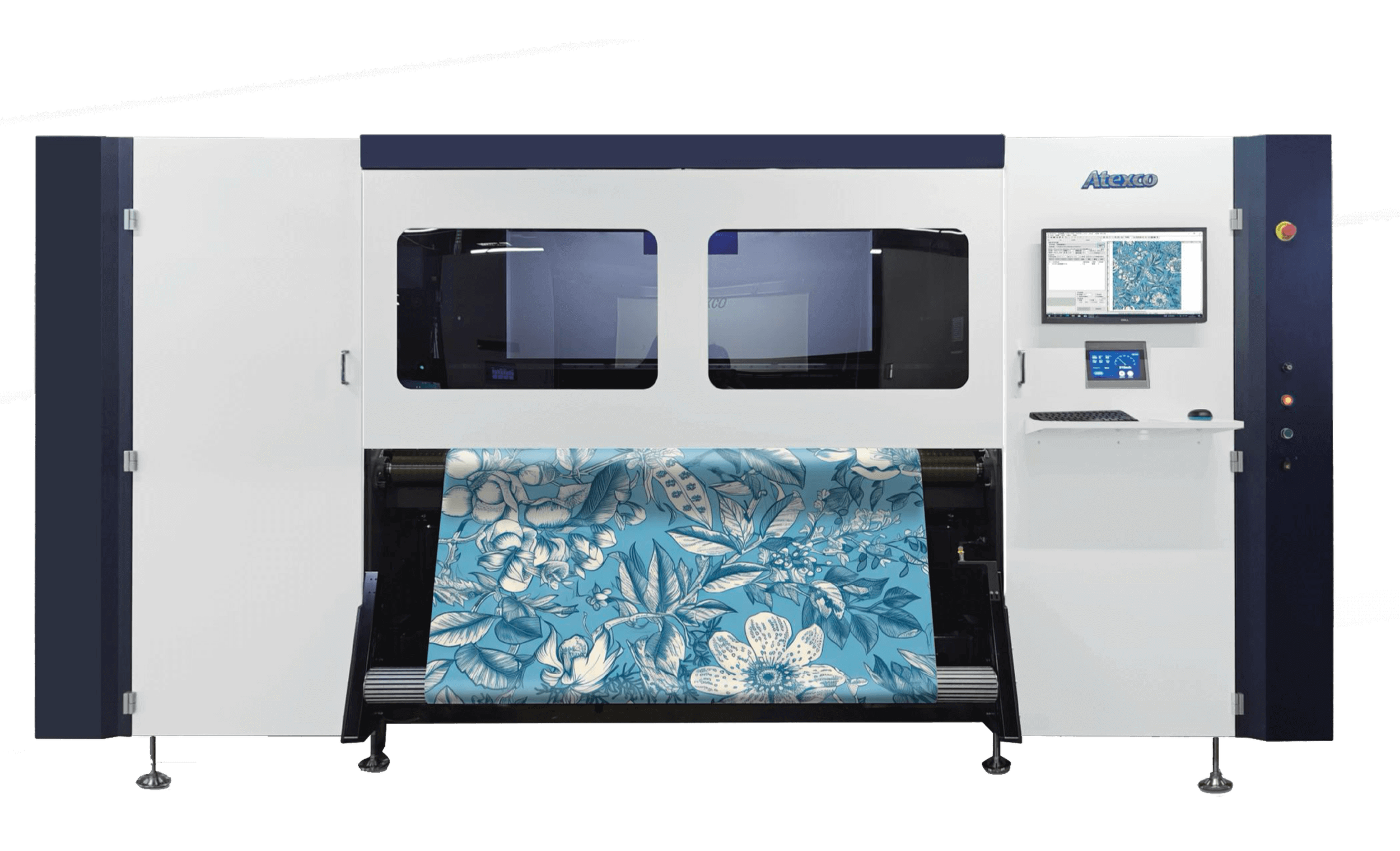
Every graphic we produce is printed on our own wide-format dye sublimation printers, in our own building. Sublimation bonds the ink into the fabric rather than sitting on top of it, which is why dasFlow apparel doesn't crack, peel, or fade the way screen-printed or heat-transfer garments do. Because the printers are ours, we control color accuracy and turn around directly instead of waiting in a vendor's queue.
dasFlow prints on the Atexco Model X Pro, an industrial dye-sublimation press built to run around the clock — its eight Kyocera recirculating printheads keep ink moving continuously so nozzles don't drop out mid-run, which is what lets us hold color consistent from the first yard to the ten-thousandth.
At speeds of up to 430 m²/h (roughly 4,600 sq ft per hour) and up to 10,000 meters of printed fabric a day, a one-off custom sample and a full team order can both move through the shop without either waiting in line behind the other. And because sublimation ink bonds into the polymer fiber instead of sitting on top of it, every dasFlow piece comes off soft to the touch, with graphics that won't crack, peel, or fade in the wash.
Laser Cutters
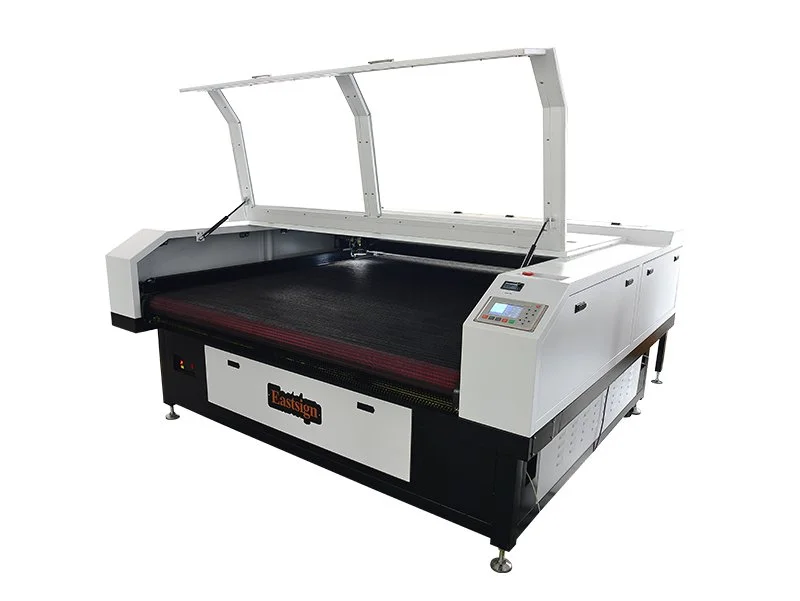
After printing, panels are laser cut to the pattern. Laser cutting is more precise and repeatable than hand or die cutting, which matters most on large orders where every size has to fit the same way. Sealed edges also reduce fraying before the panels ever reach the sewing floor. This is where "fully custom" stops being a marketing phrase — we cut to your design, not to a pre-made blank.
We use an Eastsign laser cutter that builds camera-guided CO₂ laser cutting systems for textiles — the machine photographs each printed panel and cuts to the printed contour, which self-corrects for the dimensional shift polyester takes on through the heat press. The beam seals polyester edges as it cuts, so panels come off the conveyor fray-free and ready to sew without overlocking. Roll-fed continuous operation plus nesting software is what makes it viable for volume cut-and-sew rather than sheet-by-sheet work.
Heat presses
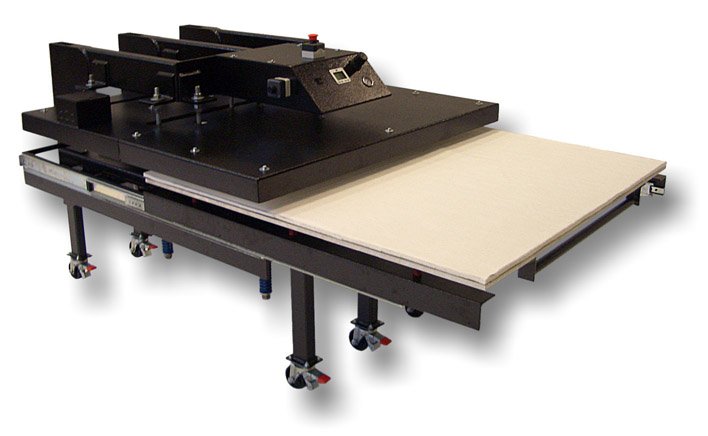
Once printed, each transfer moves to our heat presses, where controlled temperature and pressure bond the dye directly into the fibers. This is the step that separates real sublimation from a surface print. Running our own presses means we can hold consistent settings across a full team order, so the last jersey off the line matches the first one.
Our MAXI PRESS handles the transfer stage, where printed dye-sub paper meets fabric under sustained heat and pressure and the ink gasses into the polyester fibers rather than sitting on top of them. Continuous roll-to-roll feeding holds even temperature and dwell time across the full width, which is what keeps color consistent from the first yard of a run to the last. Because the dye bonds into the fiber itself, the result won't crack, peel, or wash out the way a surface-applied print will.

Made in USA
Full package, private label, manufacturing, 100% full dye sublimation printing, cut, sewn and packaged all in house, in Orlando, Florida.
@feeldasflow

